
OUR EXECUTIVE DIRECTOR

Kate Nicholson, JD, worked as a civil rights attorney in the U.S. Department of Justice for 18 years where she litigated and managed cases, coordinated federal disability policy, and drafted the current Americans with Disabilities Act (ADA) regulations.
Kate developed intractable pain after a surgical injury, which impaired her ability to sit, stand, or walk for two decades. She gave the TEDx talk, What We Lose When We Undertreat Pain, and speaks widely at universities, scientific conferences, and public health agencies.
Kate has published academic and opinion pieces related to pain in the American Journal of Law, Medicine, and Ethics, the American Journal of Public Health, the Washington Post, the Los Angeles Times, Washington Monthly, STAT, and others, and is frequently interviewed in the press.
She is an appointed member of the Department of Health and Human Services Interagency Pain Research Coordinating Council and the Advisory Council for the National Pain Research Coordinating Council and the Advisory Council for the National Institute of Neurological Disorders and Stroke. She previously served as an appointed member of the Opioid Workgroup of the Centers for Disease Control and Prevention and a 2019-20 Mayday Pain & Society Fellow. Kate also serves on task forces and working groups of mission-aligned organizations.
Kate was a Senior Fellow at Dartmouth College and is a graduate of Harvard Law School.
Kate is the Executive Director of the National Pain Advocacy Center
OUR BOARD OF DIRECTORS

Dawn is a former youth and young adult Lay Chaplain turned writer, health advocate, and family caregiver for dementia, skin cancer, and end of life.
Diagnosed with Spondyloarthritis in 2002, Dawn entered health advocacy in 2011 and founded the acclaimed weekly Twitter chat group, Spoonie Chat, in 2013. Spoonie Chat is an inclusive support space for patients and a bridge between the traditional disability movement and folks with less visible disabilities like arthritis, fibromyalgia, chronic pain, and mental illness.
Throughout its decade-long run, Spoonie Chat has become a community touchstone uniting patients across diagnosis groups, raising awareness, and driving conversations with students, clinicians, researchers, and journalists.
Over the years, Dawn’s work has grown to encompass many diagnosis groups spanning the chronic illness, disability and neuro-diverse communities, and others experiencing life altering differences. In particular, Dawn has focused on the disparities in care and discrimination faced by people of color in the chronic illness community. She was featured in Eric Boodman's Murrow Award Winning STAT News piece, “How medicine erased Black women from a ‘white man’s disease’.”
Dawn looks forward to growing patient centered advocacy, engaging the community to tell their stories on their own terms, to participate in narrative medicine, and leveraging cultural transformation to eliminate stigmas around chronic pain and all disabilities.
Dawn is the Secretary of the National Pain Advocacy Center and the Chair of the Community Leadership Council. She lives in Michigan with her family and a cadre of hand raised butterflies.

Julie Reiskin, LSCW has been Executive Director of the Colorado Cross-Disability Coalition (CCDC) since 1996. CCDC is the premiere organization in Colorado advocating for disability rights. Its mission is to advocate for social justice for people with all types of disabilities.
Through CCDC and her work in the disability community, Julie has gained expertise on nonprofit accountability and best practices, publicly funded long-term community based services, disability rights law, public benefits, health policy and Medicaid, and the intersectionality of systemic and individual advocacy.
Julie is also adjunct faculty at the Denver University Graduate School of Social Work, where she teaches Policy Advocacy and Analysis and Program Development Curricula. In 2010, Julie was appointed by President Obama to serve on the board of directors of the Legal Services Corporation. She also serves on the boards of the Colorado ACLU and the Denver Foundation.
As a wheelchair user with Multiple Sclerosis, Julie is deeply concerned about the laws limiting access to pain treatment and medication and their impact on the disability community. On September 6, 2019, Julie and Kate were asked to testify before the Colorado General Assembly’s Opioid Task Force.
Julie received her master’s in Social Work from the University of Connecticut, with a major in community organizing in 1989. She obtained a B.S. in Women’s Studies from the University of Connecticut in 1985. She lives in Denver with her partner of more than 20 years and has two adult stepsons, who both make her very proud.
Julie is Treasurer of the National Pain Advocacy Center.

Lindsay Baran, MS
Lindsay Baran, MS is a Research Director at NORC at the University of Chicago in the Health Care Evaluation Department. Her work focuses on stakeholder engagement, disability accessibility, and program evaluation. Prior to NORC, Lindsay worked for over 15 years in disability policy, advocacy, research, and service provision, most recently as the Policy Director at the National Council on Independent Living (NCIL), a national grassroots disability rights organization. At NCIL, Lindsay worked with policymakers, partner organizations, and stakeholders across the country to coordinate and implement NCIL's legislative and advocacy activities, and she started and co-chaired NCIL’s Chronic Pain/ Opioids Task Force along with NPAC’s Kate Nicholson.
Lindsay has Ehlers-Danlos Syndrome and multiple related chronic conditions, and has lived with chronic pain for most of her life. She has strong knowledge of disability and chronic pain policy, and she is deeply committed to cross-disability and cross-movement efforts. Outside of her professional roles, she has organized and facilitated chronic pain peer support groups in-person and online in Chicago and Washington, DC.
Areas of expertise: disability rights, health care, chronic pain, chronic illness, public policy, advocacy, project management, rare diseases
Twitter: @lindsay_baran

Katherine (Kate) Itacy
Katherine Itacy is an author, advocate, attorney, and a lifelong patient with a variety of diseases and disorders. For nine years, Katherine was a practicing criminal defense and appellate attorney, and during that time, strongly believed she was following her calling in life. Unfortunately, she began experiencing debilitating, intractable lower back pain at the end of 2015 and was misdiagnosed for over two years. Before being properly diagnosed with recurring tethered (spinal) cord syndrome, she was subjected to any number of painful, costly, and unnecessary treatments and procedures. During the period of misdiagnosis, Katherine developed several neurological disorders, chronic pain syndrome as well as chronic fatigue syndrome (ME/CFS), all of which have been deemed to be irreversible.
Katherine is now physically disabled and unable to work but remains passionate about activism and advocacy. Her memoir, Relentless: From National Champion to Physically Disabled Activist, was published in July of 2020. Katherine is on the boards of directors for the national ACLU as well as the Rhode Island affiliate. She is a rare disease legislative advocate for the EveryLife Foundation for Rare Diseases, a patient advocate for Henry Ford’s All of Us Research Program, a community member of the Warwick (Rhode Island) Health Equity Zone, and an advocate for type 1 diabetics. In her free time, Katherine is an avid bibliophile and an occasional true crime podcaster.
Recurring tethered cord syndrome, Chronic pain syndrome, Chronic fatigue syndrome (ME/CFS), Post-laminectomy disorder, Type 1 diabetes, Peripheral neuropathy, Proliferative diabetic retinopathy, Cardiac autonomic neuropathy

Martha Kenney, MD
Martha Kenney, MD is a board-certified pediatrician and pediatric anesthesiologist who completed medical school, residency, and fellowship training at Johns Hopkins University. She is currently an assistant professor at Duke University in the Department of Anesthesiology, where she conducts interdisciplinary research in identifying predictors of severe and chronic pain in adolescents and young adults in SCD. Her research program is supported by 5-year K award from the National Heart, Lung and Blood Institute. Dr. Kenney also holds several prominent national leadership positions, including editorial board member for The Journal of Pain.
Outside of conducting research, Dr. Kenney is a certified professional coach with a deep-seated passion for helping women in medicine with work-life balance, time management, and early career development.
Areas of expertise: sickle cell disease, chronic pain, pain medicine, engagement, quantitative sensory testing, patient-reported outcomes
LinkedIn: https://www.linkedin.com/in/kenney-md

Quána Madison
Quána Madison is an artist, consultant, mindfulness teacher and arts-based wellness instructor. Expressive arts revived her soul after enduring cancer previvor treatments and developing disruptive life-changing chronic illnesses. She has fibromyalgia, chronic pain syndrome, chronic fatigue syndrome/myalgic encephalomyelitis, peripheral neuropathy and autoimmune disease. She is the author of the memoir, LoSing Strength & Dexterity, a journey of pain, suffering, creative coping and searching for inner peace told through letters, poetry and reflections. As a mindfulness teacher and arts-based wellness instructor, she combines inner wellness practices with expressive arts to promote physical, emotional, mental, and energetic well-being. A graduate of New York University and Colorado College, Quána holds a MA in Education and a BA in Philosophy. More information is available at www.quanamadison.com
Preventive surgeries for Breast, Uterine, and Ovarian Cancers (BRCA1, ATM and NBN genetic mutations), Fibromyalgia, Peripheral Neuropathy, Autoimmune Disease, Myalgic Encephalomyelitis/Chronic Fatigue Syndrome.

Laura Mills
Laura Mills is a human rights researcher and advocate. She previously worked at Human Rights Watch, where she conducted research on the right to health, disability rights, and older person’s rights in the US, Russia, Ukraine, and Central Asia. She currently works as a researcher at Amnesty International focusing on older people and people with disabilities in armed conflict and emergency situations.
In 2018, for Human Rights Watch, she authored a 99-page report, Not Allowed to Be Compassionate: Chronic Pain, the Overdose Crisis, and Unintended Harms in the US, which highlighted the impact of restrictive policies and practices on chronic pain patients.
Together with physician and patient activists, she met with members of the Centers for Disease Control and Prevention to advocate for much-needed clarifications of the CDC guideline. She also met with representatives of the Centers for Medicare and Medicaid Services, campaigned to stop simplistic but harmful bills on Capitol Hill, and echoed calls for Oregon to back down from a proposal to involuntarily taper Medicaid patients off opioids. Throughout the reporting process, Laura was inspired by people she met who endured serious, often under-treated pain every day. While her project for HRW came to an end in June 2019, she felt motivated to continue her work on behalf of people in pain.

Ola Ojewumi
Ola Ojewumi is an activist, writer, speaker, and non-profit founder. She is also a double organ transplant (heart and kidney) and cancer survivor. As a result of her health issues, Ola became a wheelchair user who suffers from chronic pain. As an advocate, she has advised the Obama Administration and other policymakers on policies to advance the lives of people living with disabilities.
Ola has written for publications like CNN and the Huffington Post, and she has appeared on in the national media, such as on PBS’s Democracy Now and MSNBC’s AM Joy with Joy Reid. Her speeches alongside Senator Cory Booker and Senator Bob Menendez have gone viral with 3.7 million views.
Ola is the board representative to the Community Leadership Council.
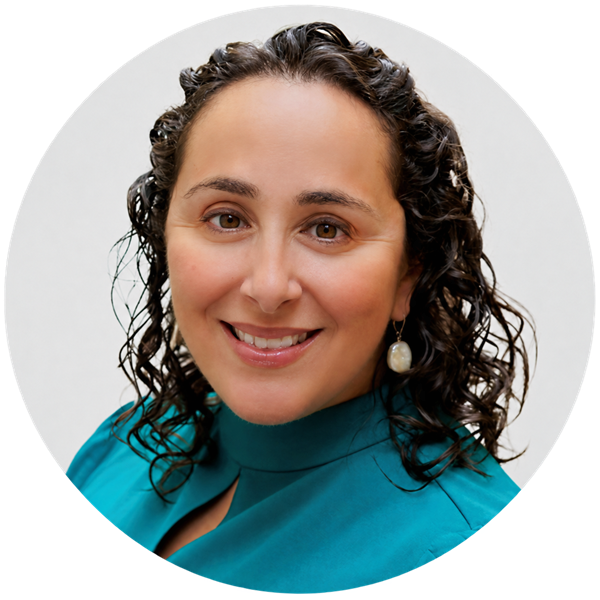
Laura Wandner
Laura Wandner, PhD is an Associate Professor of Neurology at the Icahn School of Medicine at Mount Sinai. Her interdisciplinary research focuses on improving pain and migraine care through patient-centered research, with an emphasis on patient-reported outcomes, treatment outcomes, and engagement of people with lived experience. She also supports research workforce development and helps lead the Neurology Fellowship research rotation at Mount Sinai. Previously, Dr. Wandner served as Branch Chief of the Office of Pain Policy and Planning at the National Institute of Neurological Disorders and Stroke (NINDS), where she led clinical pain research programs, workforce development, and data harmonization initiatives.
Outside of research, Dr. Wandner sees patients in her private practice, consults on science and workforce development, and enjoys walking, rowing, and swimming.
Areas of expertise: patient-reported outcomes, chronic pain, engagement, behavioral health interventions, and migraine